21 prompts to learn investing the right way: SIPs, mutual funds, stocks, risk and research. Learn to decide for yourself and avoid tips and scams.
Everyone is talking about SIPs, IPOs and “multibagger” stocks, and many beginners lose money following tips. This book uses AI as a teacher, not a tipster: it explains concepts with ₹ examples, helps you read fund factsheets and company basics, builds your own checklist and keeps you away from scams. You learn to think, not to copy.
Understand how the stock market, mutual funds and SIPs work in plain language
Compare funds and read factsheets, expense ratios and risk levels
Learn basic company analysis: business, financials and red flags
Build a simple personal investing plan by goal and risk
Spot and avoid tips, scams and emotional mistakes
Who it’s for
First-time investors, young professionals, students, women investors and parents who keep hearing about SIPs and shares but feel lost.
Best tool for this book: ChatGPT, Gemini or Claude (free) to learn concepts. Perplexity (free) to research facts with sources, but always confirm on official sites (AMFI, SEBI, NSE/BSE, the fund house). AI can be wrong about live prices and returns, so never use it for “what to buy today”.
What’s inside
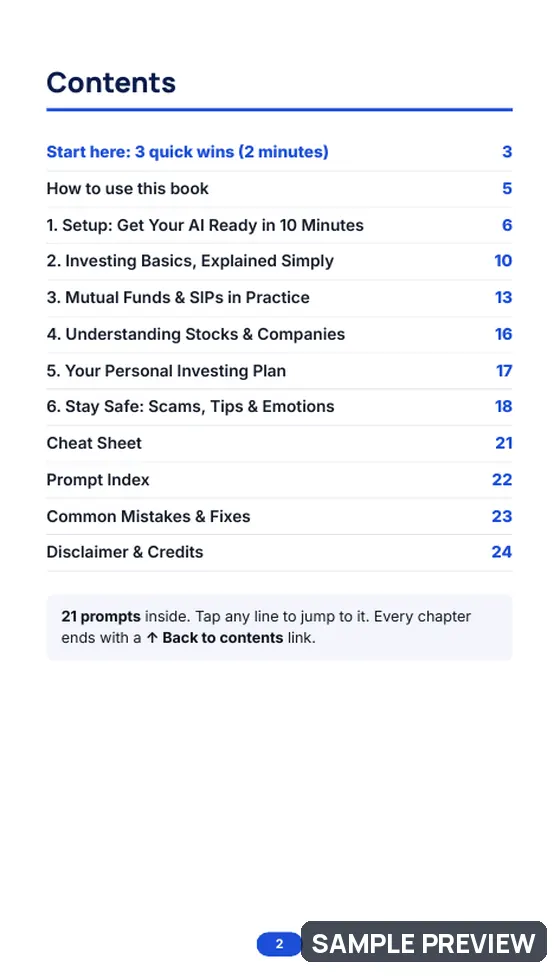
1. Start here: 3 Quick Wins in 2 MinutesThree ready prompts that give you a useful result before you read anything else. · 3 prompts
2. Setup: Get Your AI Ready in 10 MinutesChatGPT, Gemini, Claude, Copilot, Meta AI & Perplexity: free vs paid plans, step by step.
3. Investing Basics, Explained SimplyLearn the language before you invest a rupee. · 4 prompts
4. Mutual Funds & SIPs in PracticeMost beginners start here. Learn to compare and monitor. · 5 prompts
5. Understanding Stocks & CompaniesIf you want to buy individual shares, learn to study the business first. · 3 prompts
6. Your Personal Investing PlanA plan you understand beats a portfolio you copied. · 2 prompts
7. Stay Safe: Scams, Tips & EmotionsProtecting your money is as important as growing it. · 4 prompts
Quick-reference cheat sheet, prompt index, common mistakes & fixes
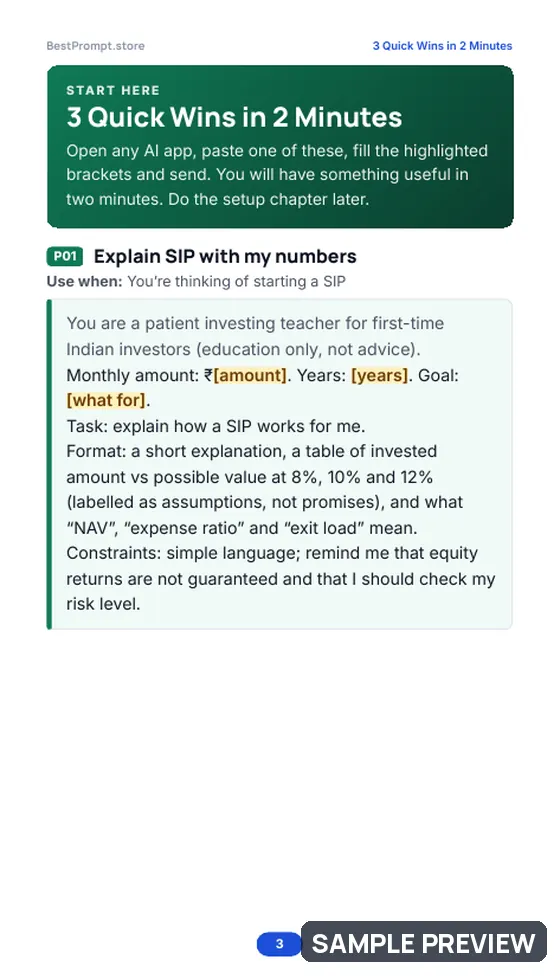
Copy one into ChatGPT, Gemini or Claude now and replace the [brackets] with your details.
Explain SIP with my numbers
Use when: You’re thinking of starting a SIP
You are a patient investing teacher for first-time Indian investors (education only, not advice).
Monthly amount: ₹[amount]. Years: [years]. Goal: [what for].
Task: explain how a SIP works for me.
Format: a short explanation, a table of invested amount vs possible value at 8%, 10% and 12% (labelled as assumptions, not promises), and what “NAV”, “expense ratio” and “exit load” mean.
Constraints: simple language; remind me that equity returns are not guaranteed and that I should check my risk level.
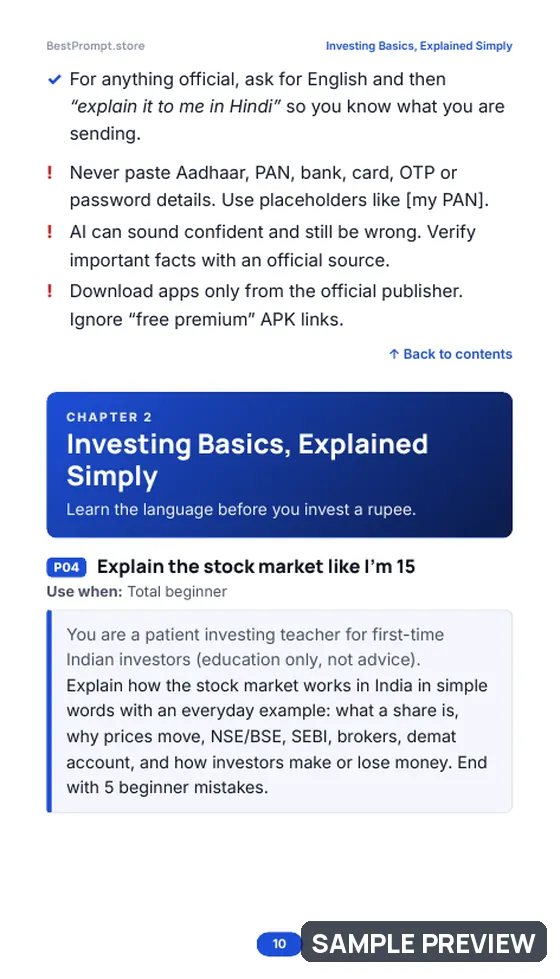
Explain the stock market like I’m 15
Use when: Total beginner
You are a patient investing teacher for first-time Indian investors (education only, not advice).
Explain how the stock market works in India in simple words with an everyday example: what a share is, why prices move, NSE/BSE, SEBI, brokers, demat account, and how investors make or lose money. End with 5 beginner mistakes.
How to choose a mutual fund
Use when: Making your first selection
You are a mutual-fund educator who explains SIPs, fund types and costs simply (education only).
Teach me a step-by-step framework to shortlist mutual funds for [goal] over [years]: category choice, index vs active, expense ratio, fund size, consistency, portfolio overlap, and exit load. Don’t name specific funds; tell me where to find this data (AMFI, fund factsheets, Value Research, Morningstar).
Get all 21 prompts, worked examples and the cheat sheetBuy for ₹99